
Whoa!
I felt a real jolt of curiosity about smart card wallets after seeing one at a conference. At first glance it seemed like a novelty for enthusiasts only. But then I dug into the UX, the security trade-offs, and the hardware constraints. Initially I thought tangible cards would be clunky, but after testing a few prototypes I realized their contactless form factor actually solves several mobile-first UX problems while keeping private keys offline in a surprisingly elegant way.
Really?
My instinct said: somethin’ here might actually change how people manage keys. The first impression was disbelief, though the demo won me over quickly. On one hand contactless cards feel familiar like a commuter pass; on the other hand they carry very very serious cryptographic baggage that most users will never see. Actually, wait—let me rephrase that: you get a familiar interaction layer while the complicated crypto stays hidden, which is the whole point.
Whoa!
I tried a card for a week and had a small aha moment in an airport. The NFC tap worked instantaneously with the mobile app, and I didn’t fumble with cords or scanning QR codes. Something felt off about how simple it was, because security typically comes at the cost of convenience. But this felt different, and that surprised me.
Here’s the thing.
Contactless smart cards pair almost silently with phones, and they store private keys in a tamper-resistant chip. The mobile app handles the orchestration and presents a clean UX that doesn’t overwhelm novice users. Though there are caveats—recovery options and backup strategies remain thorny, especially for users who misplace cards or phones while traveling. Initially I thought on-device seed backups were mandatory, but then I realized combining a secure card with a recovery passphrase and app-based multisig gives a stronger, more user-friendly resilience model without exposing keys to the cloud.
Really?
Security pros will squint at a card that connects over NFC. That’s fair. The chip must implement secure elements and robust signing protocols to be trusted. On the other hand, when a card isolates the private key from the phone’s OS it reduces the attack surface meaningfully, though the phone still needs to be trusted for transaction display and approval. I’m biased, but that trade-off often favors smart cards for everyday users who want simplicity plus strong safety.
Whoa!
Okay, so check this out—there’s a balance to strike between hardware, app design, and user education. The mobile app has to be dumb enough to be usable and smart enough to prevent mistakes. My first tests exposed UI pitfalls like ambiguous confirmation wording and hidden fees, which bugs me because small wording changes can prevent catastrophic mistakes. On the second pass the app designers tightened flows, added contextual warnings, and made the card pairing process more intuitive, which improved my confidence.
Here’s the thing.
Integration with contactless payments is the real kicker for mainstream adoption. Imagine tapping the same card to pay at a cafe and to sign a crypto transaction with clear, verifiable intent. The hardware can be locked with a PIN, biometrics via the phone, or both, letting users choose their comfort level. That flexibility is powerful, though certain threat models—like coercion—still need extra design work and social engineering defenses. I’m not 100% sure we’ve solved those scenarios, but the design space is promising.
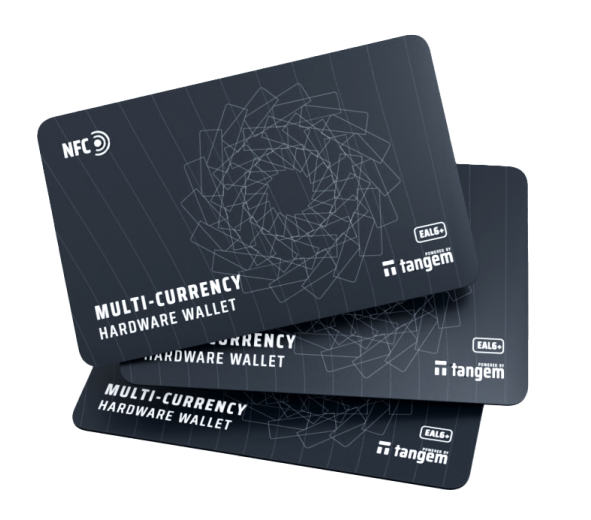
Why I Recommend a Tangible Smart-Card Setup
Seriously?
I want to point you toward practical setups that work in the real world, not just on paper. One option I keep coming back to is pairing a contactless smart card with a robust mobile app that supports transaction previews and recovery options—so when I say check out the tangem hardware wallet I mean it as an example of this approach. The card keeps the keys offline while the app gives you familiar mobile controls, and together they reduce the cognitive load for newcomers while still satisfying advanced users.
Whoa!
What bugs me about many solutions is recovery. Many people skip backups and then panic. The smart card model forces a design re-think: you either duplicate hardware, create a social recovery plan, or embrace multisig with a custodial fallback. Each choice has trade-offs, and each trade-off couples with the user’s lifestyle and risk tolerance. I’m biased toward multisig plus a physical backup, but I admit that’s not perfect for everyone.
Really?
From a UX perspective the mobile app must show clear transaction details and provide confirmation in plain language. Developers often assume “sign this hash” is understandable, which it isn’t—so the app needs to map addresses to names when possible and highlight amounts in fiat alongside crypto values. The card’s hardware confirmations should be minimal but cryptographically sound, because too many prompts lead to blind confirmation and too few leave users confused about intent.
Whoa!
On the implementation side, standards matter: secure elements, FIDO-like attestation, and open verification paths reduce vendor lock-in. Closed systems can be slick, but they often hide recovery complexity and force dependency on a single vendor. I’m not dismissing proprietary convenience; I just want people to see the options and choose wisely.
Here’s the thing.
For daily use, pairing contactless payment capability with crypto management makes sense in cities where NFC payments are ubiquitous. The average commuter taps a card every day, so adding asset management to that mental model is natural. In rural areas or for high-security custodians the calculus changes, though the core benefits—separation of keys from phones and easier physical handling—still apply. On balance, cards lower friction while preserving strong offline key custody if implemented carefully.
Really?
I’ll be honest: adoption will hinge on trust and habit more than tech specs. Users need to trust the brand, the recovery story, and the mobile app experience before swapping their seed phrases for a sleek card. And frankly, education is still behind the curve; we need better metaphors and simpler setup flows, not denser manuals. I’m optimistic though—this space moves fast and smart card UX is improving day by day.
FAQ
Is a contactless smart card as secure as a hardware wallet?
Short answer: it can be. When the card uses a certified secure element and the mobile app enforces proper transaction previews, the overall security model is comparable to many hardware wallets, though the threat profiles differ. Cards reduce phone-based attacks but introduce new concerns like physical loss, which is why recovery strategies are essential.
What happens if I lose the card?
Options include having a secondary backup card, using a recovery passphrase, or deploying a multisig scheme where multiple devices or people can approve transactions. Each choice has trade-offs between convenience and security. I’m biased toward a redundant strategy—two cards plus multisig if you’re moving serious sums.
